

Ripple (XRP) has been in the news for years because of its legal fight with the SEC. Many people in the crypto world have been wondering if it’s finally legal to use or trade Ripple in the United States. Now that we’re in 2025, the situation is starting to make more sense. Some decisions have been made in court, and they’ve helped clear up a lot of the confusion. But people still have questions. Can you buy Ripple without worrying? Is it safe to invest in it now? In this article, we’ll look at what’s happening with Ripple in the US, explain the latest updates, and help you understand what it all means for XRP going forward.
Understanding Ripple: A Brief Overview
Ripple is a technology firm that developed RippleNet, a payment network that operates internationally to enhance the speed and cost of cross-border payments. At the core of this network is XRP, which is the digital asset that is used to enable the transfer of money across borders in a more efficient manner.
In contrast to Bitcoin, which is primarily applied as a store of value, Ripple is more active in solving the practical issues of banking. It seeks to substitute the costly and slow international payment systems that have been adopted by traditional banks. XRP serves as a mediator between two different currencies to convert one to another quickly and avoid maintaining values of multiple currency units.
Ripple was launched in 2012 and gained attention for partnering with financial institutions. Over time, it built strong support in the crypto space. However, it also attracted regulatory scrutiny, which led to the major legal battle that brought its status into question in the US.
Is It Safe to Invest in Ripple Now?
Investing in Ripple (XRP) today is safer than it was a few years ago when the legal case with the SEC first started. The courts have clarified that XRP is not a security when sold on public exchanges, which removed a huge cloud of doubt for investors. This decision helped restore confidence, and many exchanges and platforms brought XRP back, giving users easier access and boosting trading volume.
But even with these positive changes, no crypto investment is 100% safe. Ripple’s future still depends on how US regulations develop and how global banks adopt its technology. The crypto market, in general, is volatile, and Ripple is no exception. Prices can move up or down quickly based on news or market trends.
If you’re planning to invest, it’s important to understand the risks. Ripple is more stable legally now, but smart investors always do their research and avoid putting in more money than they can afford to lose.
Can You Actually Buy Ripple Without Worrying?
If you’re in the United States and thinking about buying Ripple (XRP), the good news is that it’s now more accessible than it was during the height of its legal troubles. After years of back-and-forth between Ripple Labs and the SEC, recent court rulings have made it clearer that buying XRP isn’t illegal. Several major exchanges that had previously delisted Ripple have now relisted it, giving buyers more confidence.
That said, “without worrying” depends on what kind of investor you are. If you’re buying XRP for short-term gains or trading, you can access it on many platforms without legal concerns. However, there’s still some uncertainty surrounding long-term regulations in the crypto space. So while Ripple itself isn’t banned or illegal, the overall crypto market still faces potential changes.
The Legal History of Ripple in the US
The legal history of Ripple in the United States began in late 2020 when the Securities and Exchange Commission (SEC) filed a lawsuit against Ripple Labs. The SEC claimed that Ripple had sold XRP as an unregistered security, raising over $1.3 billion without following proper legal procedures. This lawsuit shook the crypto community, and many exchanges in the US quickly suspended or delisted XRP to avoid legal trouble.
However, when Ripple refused, the company did not back down. The argument of the company was that XRP is not a security but more of a Bitcoin or an Ethereum. The judicial process was also long, and the arguments presented by the parties contradicted each other. In 2023, a United States federal court issued a critical decision, comparing XRP to an asset that is not a security when transferred on a public exchange. This decision became a considerable victory for Ripple and provided investors with some insight.
Despite that victory, the case wasn’t fully resolved. Some legal issues still linger, and regulators continue to watch Ripple closely. However, the major concerns around its legality have eased, and Ripple is once again available on most crypto platforms in the US. This history shows how regulation can deeply affect even well-established cryptocurrencies.
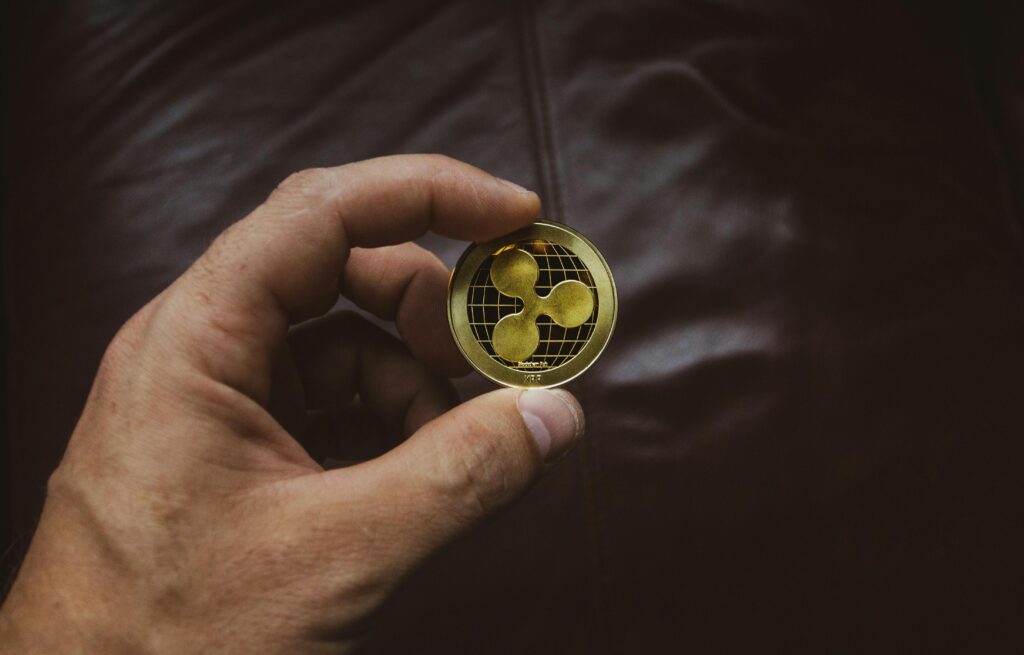
Recent Updates: Is Ripple Legal in the US Now?
In 2025, Ripple’s legal situation in the US has finally started to settle. After years of courtroom back-and-forth with the SEC, Ripple reached a resolution. The company agreed to a reduced fine, and the SEC officially dropped the lawsuit, putting an end to the long-running case that began in 2020. This move gave the crypto community a much clearer picture of Ripple’s status.
Now, XRP is once again listed on major exchanges in the US, and people can trade it without fear of legal trouble. While Ripple didn’t admit to any wrongdoing, the outcome strongly suggests that XRP is not considered a security when traded on public platforms. This has brought some much-needed clarity for both investors and exchanges. So yes, as of now, Ripple is legal to trade in the US and is regaining trust in the crypto space.
Key Court Cases Impacting Ripple’s Legality
The SEC Lawsuit in 2020
Ripple’s legal troubles began in December 2020 when the U.S. Securities and Exchange Commission (SEC) filed a lawsuit against Ripple Labs. The SEC claimed that Ripple had raised over $1.3 billion by selling XRP as an unregistered security. This lawsuit sent shockwaves through the crypto market. Many U.S. exchanges reacted quickly by suspending or delisting XRP to avoid regulatory issues.
The 2023 Court Ruling
A major development came in July 2023 when a federal judge ruled that XRP is not a security when sold on public exchanges. However, the court also ruled that XRP can be considered a security in some direct institutional sales. This split decision allowed XRP to return to most trading platforms in the U.S. and gave some clarity, though not full relief.
Final Settlement in 2025
In 2025, Ripple and the SEC reached a final agreement. Ripple paid a reduced fine, and both sides dropped their appeals. The court upheld that XRP’s secondary market sales are legal. This brought long-needed clarity for Ripple and helped shape how other cryptocurrencies may be treated under U.S. law going forward.
The Role of the SEC in Ripple’s Legal Status
The U.S. Securities and Exchange Commission (SEC) played a central role in shaping Ripple’s legal journey. In 2020, the SEC filed a lawsuit against Ripple Labs, claiming that the company sold XRP as an unregistered security. This move created a wave of uncertainty across the crypto industry and raised a much bigger question: what exactly makes a cryptocurrency a security?
The case by the SEC against Ripple was not only related to a single company; it was viewed as a case study that could determine how other digital assets would be handled when faced with U.S. law. As the proceeding continued, it became evident that what the SEC sought to do was to impose additional regulations on the fast-growing crypto market.
The case was winding its way through the courts in a few more years, and in 2023, it gave a divided decision. XRP was decided not to be a security during the sale to the general populace, but continues to be suspect during the direct institutional sales. Ultimately, the case was resolved in 2025, and XRP was clarified as a legal asset that can be traded.
Implications of Ripple’s Legal Status for Investors
Ripple’s legal clarity has made things a lot easier for investors. Just a few years ago, many people were unsure whether holding or trading XRP in the U.S. was even allowed. Exchanges were delisting it, the SEC was going after Ripple, and the whole situation felt risky. But now, after the case has been settled and XRP is no longer considered a security in public trading, the pressure has eased.
For everyday investors, this means they can now buy, sell, and hold XRP on major U.S. platforms without constantly worrying about legal consequences. That sense of uncertainty that hung over Ripple for years is mostly gone.
It also builds trust. When a cryptocurrency survives a legal battle like this, it shows resilience. Investors may still need to deal with market ups and downs, but they’re no longer dealing with the fear that their investment could be banned overnight.
The case against Ripple has also led to the path of increased clarity in the entire crypto industry. That is good news to long-term holders. It implies that the market is maturing–and the investment platform is stronger on which it can build now on the investor’s side of the market channel.
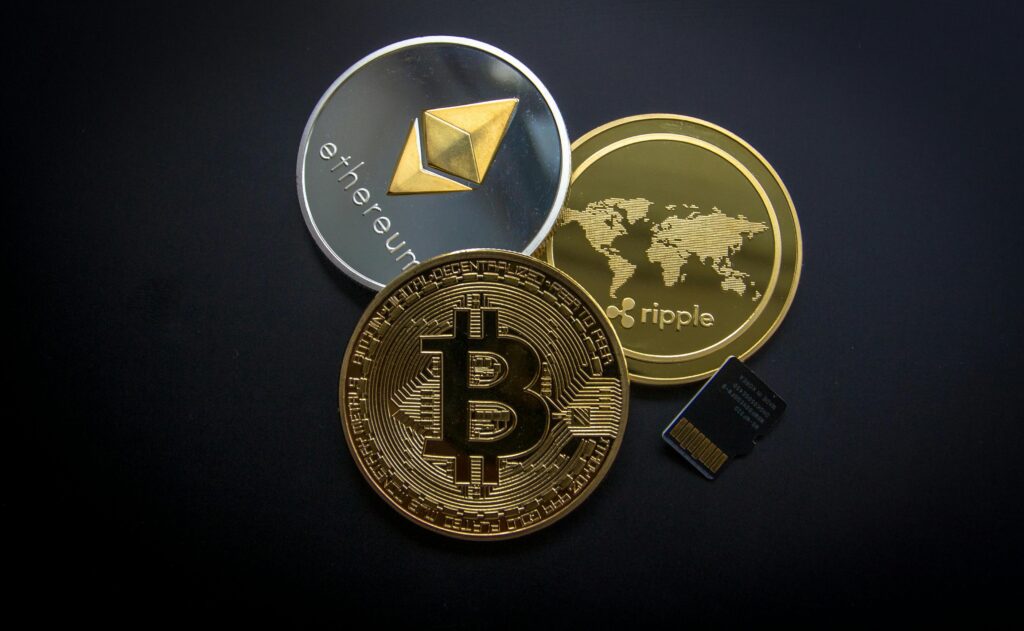
How Ripple’s Legal Status Affects the Crypto Market
Ripple’s legal outcome hasn’t just helped XRP holders—it’s had an impact on the broader crypto market too. For years, people in the crypto space watched the Ripple case closely because it had the potential to set legal standards for how other cryptocurrencies might be treated. Now that XRP has been cleared for public trading, it gives other projects some hope and direction.
Exchanges that had once been cautious are now more confident about listing or relisting certain tokens. Developers and crypto companies also feel more comfortable building new projects without the constant fear of being targeted by regulators. It’s not a full green light, but it’s a sign that progress is happening.
Future Predictions for Ripple’s Legality in the US
In the future, the situation with Ripple in the United States could be much more stable as compared to several years ago. Ripple has a chance to experience growth after the SEC case was settled in the past, and its XRP could be listed back on the main exchanges. The majority of the specialists believe that the challenges of the future will not pose a challenge to the functionality of XRP in the secondary market. Nevertheless, the cryptocurrency landscape is now developing, and yet regulators may present some new regulations that may have an impact on Ripple and other digital currencies.
It is logical to understand that legislators are likely to be more attentive to crypto, the wider its use spreads, and the more individuals use it to make payments. Ripple will likely have to remain versatile and open to collaborating with regulators to ensure its legal status remains intact.
Meanwhile, Ripple, being partnering with banks and other financial institutions, can help it empower its stance. The greater the number of legitimate uses that it demonstrates, the less it can be doubted in its marketplace. Thus, although some obstacles might lie ahead, the future is much safer than it used to be in the case of Ripple. This gives the investors a higher assurance that in the next couple of years, XRP will remain a legal and tradable asset in the U.S.
Summary
It is high time Ripple musters courage and comes out of its legal quagmire in the United States. Years after the uncertainty, the SEC dismissed its case against XRP, and a critical court decision confirmed that, on sale, XRP is not a security on recorded markets. This has paved the way for XRP to resume its trading on big American exchanges, with an investor having more confidence and clarity. The Ripple Case not only impacted the future of Ripple but also influenced the perception of the regulators and the crypto market regarding digital assets in general. The SEC ruling has now given investors the confidence they need to trade in XRP without fearing becoming involved in a legal scandal, and the crypto ecosystem has received a valuable precedent of the regulation process that can take place. Although the future regulations and control may still be underway, the potential and solid position of Ripple is already demonstrated. Ripple will move on working on its network as well as expanding its influence further without virtually as much legal peril accompanying its name.
FAQ’s
Are American banks using Ripple?
Yes, some American banks have explored Ripple’s technology for cross-border payments. While full adoption is limited, a few have tested or partnered with RippleNet to improve international transaction speed.
Is XRP USA owned?
XRP is not owned by any single country. It was created by Ripple Labs, a U.S.-based company. However, XRP operates as a decentralized digital asset across global markets, not just in the U.S.
Who is the CEO of Ripple?
As of 2025, the CEO of Ripple is Brad Garlinghouse. He has led the company through major legal challenges and continues to focus on expanding Ripple’s role in global finance and payments.
How old is Ripple?
Ripple Labs was founded in 2012, making the company over 12 years old. Since then, it has developed RippleNet and XRP, aiming to modernize global banking and cross-border payments.

