
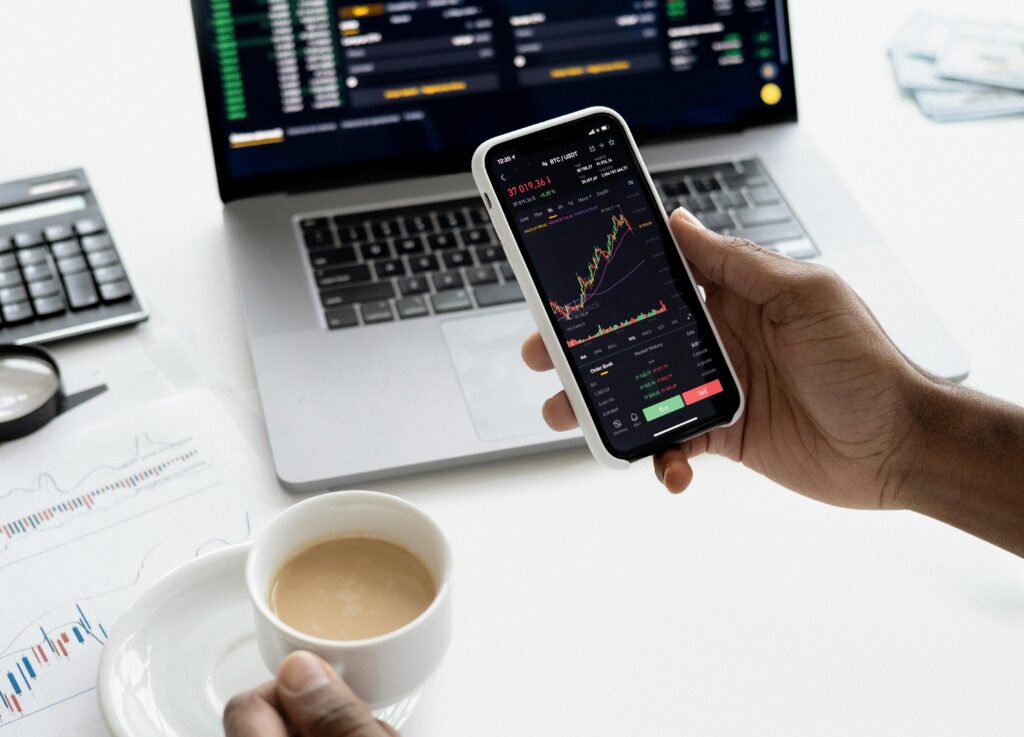
Tokens, as well as coins, are a common term in cryptocurrency, describing different things depending on their context. A coin refers to a digital currency that has its blockchain, e.g. Bitcoin or Ethereum. The coins are used either as a unit of payment, a unit of store of value or a unit of exchange.
Tokens, in their turn, are constructed on existing blockchains and can constitute representations of different assets or utilities. They have a particular use case as part of the ecosystem of a project, such as using a service, voting in a governance process or a digital representation of property. Knowing the distinction is useful to any person interested in crypto investments or blockchain technology. It also assists in making constructive choices and preventing demoralisation in moving among the rapidly advancing sphere of digital currencies.
Understanding the Basics: Cryptocurrency
Cryptocurrency is digital money that employs the use of cryptography to facilitate transactions and regulate the generation of new blocks. As opposed to conventional money, which governments issue, cryptocurrencies exist on decentralised networks and are typically facilitated through a technological process known as blockchain.
A blockchain is a public ledger with a stored record of all transactions, where transactions are transparent and secured. The first cryptocurrency, Bitcoin, was launched in 2009 and is the most famous one up until now. Since that time, thousands of other cryptocurrencies have been created, and each of them has its specifics and usage. There are payment-oriented, power-oriented (decentralised applications) and asset-oriented tokens.
Users must have a digital wallet to make use of the cryptocurrency that holds the keys required to make and receive payments. It is essential to know the essentials so that beginners can have an idea of how cryptocurrencies work, their possible advantages, and challenges. Such knowledge can be recommended to everyone who wants to invest, trade, or make any other use of digital assets in the modern financial environment.
What is a Coin in the Crypto World?
In the crypto world, a coin is a form of digital money that has its blockchain. Such well-known examples are Bitcoin, Ethereum, and Litecoin. Coins are mainly created as money or to be utilised as a medium of exchange, and also serve on purpose of being a store of value or a unit of account. They can be generated following a mining process or staking operation, and depend on the scheme of reaching consensus of the blockchain.
Coins validate the transactions and preserve their blockchain since they possess their own networks. As an illustration, Bitcoin transactions are made via the Bitcoin blockchain and Ether transactions are administered on the Ethereum network. One can use coins to perform peer-to-peer payments, international transfers or even become an investor. Market demand, scarcity, and adoption are factors that affect the value of the token, which makes them an important constituent of the cryptocurrency world.
What is a Token in Cryptocurrency?
A digital asset, a cryptocurrency token, does not have its blockchain, but instead is overlaid onto that of another blockchain. As an illustration, a variety of tokens run on the Ethereum blockchain based on a protocol such as ERC-20 or ERC-721. Tokens may be used for any of the following: grant access to services, facilitate decentralised voting, serve as the token of real-life assets ownership, or serve as a currency inside games.
In contrast to coins, the tokens are secured by the blockchain and their transactions are validated. They are usually spread over Initial Coin Offerings (ICOs) or token sales to fund projects. Tokens are divided accordingly to the purpose or intention they are brought to the crypto sphere, i.e. tokens as utilitarian, security, and non-fungible tokens (NFTs). Being flexible, they can be used to power the decentralised applications and generate new and innovative use cases, which are further than mere payments, becoming an important constituent of blockchain-based project applications.
Which is the best coin or token?
What will be the most appropriate coin/ token is a question that depends on what your need is, what your objective is, and what your risk tolerance is. Such coins as Bitcoin, Ethereum are regarded as powerful options because they have developed networks and sufficient security and are widely used. Bitcoin can be a great store of value and inflation hedge, whereas Ethereum is a sophisticated platform of decentralised apps and decentralised smart contracts.
In the case of tokens, potential good ones are frequently bound with established blockchain initiatives. As an illustration, the LINK token built by Chainlink enjoys decentralised oracles, and the UNI token built by Uniswap makes governance possible in one of the most prominent decentralised exchanges. Some of the important characteristics to look at include security, practical applications in real life, ease of expansion and community. Use cases, sprightly development, and long-term prospective growth should be evident in a good coin or a token to ensure that the coin or token will not be useless in a dynamic crypto market.
Key Differences Between Token and Coin in Crypto
Coin
A coin within the cryptocurrency is a native digital currency that runs on its blockchain. Such examples are Bitcoin, Ethereum, and Litecoin. Every coin has its network and functions to process payments, record the information in the form of a ledger and provide security via consensus systems like proof-of-work or proof-of-stake.
The most common use of coins is related to their financial potential, i.e., they can be used as a medium of exchange, as a store of value, and as units of account. Their acquisition may be in the form of mining or staking, depending on how the blockchain is made. Due to them being the backbone in their platforms, coins are usually more stable than the tokens, and in most economies of the blockchains, coins form a backbone . They fluctuate depending on factors such as the supply, demand, adoption and investor sentiment. Coin can be utilised in most cases, through peer-to-peer payments, investments, and to drive transactions within the network.
Token
A cryptocurrency token is any digital asset that is not based on its blockchain, but runs on an existing blockchain issuing tokens. The majority of tokens are deployed on platforms like Ethereum, which run off standards like ERC-20 or ERC-721 to create fungible tokens or NFTs. The uses of tokens can vary immensely, including the right to access platform services, a claim on governance, conversion to real-world assets or in-game currencies.
In contrast to coins, tokens are based purely on the underlying blockchain (there is no transaction validation) and therefore are simpler and faster to issue. The most common form in which they are exchanged is either in the Initial Coin Offerings (ICOs) or tokens, Martin. Tokens are broader in their functionality but may also be more volatile since the value is usually correlated to the success of the project concerned. They have many important applications in decentralised programs, blockchain video games and finance.
The Role of Blockchain in Coin and Token Creation
Providing the Foundation for Coins
Blockchain serves as the fundamental infrastructure for creating coins. A coin exists on its own blockchain, meaning the network is built specifically to support that currency. For example, Bitcoin runs on the Bitcoin blockchain, while Ethereum has its own separate network. The blockchain ensures that all transactions are recorded in a secure, immutable ledger, preventing fraud and double-spending. It also establishes the rules, consensus mechanisms, and security protocols that govern how the coin operates.
Enabling Decentralization
One of blockchain’s key roles is decentralization. For coins, this means there is no single authority controlling issuance or validation. Instead, a distributed network of nodes verifies transactions and maintains the system’s integrity. This makes coins resistant to censorship and central control, offering a transparent and trustless environment.
Facilitating Token Creation Through Smart Contracts
Tokens are built on existing blockchains, and blockchain technology makes this possible through smart contracts. On networks like Ethereum, developers can write code that defines a token’s behavior, supply, and rules. This eliminates the need to build a new blockchain from scratch, making token creation faster and more cost-effective.
Providing Security and Transaction Validation for Tokens
Tokens rely on the host blockchain’s infrastructure for their security and transaction processing. Since tokens do not have their own blockchain, they benefit from the established network’s consensus mechanism, whether proof-of-work or proof-of-stake. This ensures that token transactions are secure, traceable, and resistant to tampering.
Enabling Interoperability Between Tokens and Applications
Blockchain allows tokens to integrate seamlessly with decentralized applications (dApps). For example, Ethereum-based tokens can be used across multiple platforms that support the ERC-20 or ERC-721 standard. This interoperability is possible because the blockchain maintains a unified set of rules and protocols for token management.
Supporting Fundraising and Project Development
Through blockchain, tokens can be issued during Initial Coin Offerings (ICOs) or other fundraising events. Smart contracts ensure that these distributions are automated and transparent, building trust among investors. The blockchain records every transaction, creating a permanent, verifiable history.
Ensuring Transparency and Traceability
Whether for coins or tokens, blockchain keeps an open ledger of all activities. This transparency allows users to verify balances, track transfers, and confirm the legitimacy of assets, which strengthens trust in the cryptocurrency ecosystem.
Use Cases: When to Choose a Coin Over a Token
Choosing between a coin and a token depends on your goals, technical requirements, and the level of independence you need. Coins are best suited when you require a fully independent network and control over the blockchain’s rules, governance, and security. If you are building a digital currency to act as a medium of exchange or store of value on a large scale, a coin is the right choice.
Coins are also ideal when decentralisation is a priority. Since they operate on their blockchains, they are less dependent on third-party platforms, offering higher resilience and censorship resistance. Businesses or projects aiming for long-term stability, wide adoption, and independent ecosystem growth often prefer coins.
Another reason to choose a coin is when developing a platform that will process a high volume of transactions, such as payment systems, decentralised finance (DeFi) blockchains, or global remittance solutions. Coins can be optimised at the blockchain level for performance, scalability, and lower transaction fees.
Finally, coins are generally better for projects seeking to build trust and attract investors over time. An independent blockchain with its currency demonstrates technical capability, long-term vision, and commitment to sustainability, which can enhance credibility and adoption. By choosing a coin, you gain complete ownership of your network, making it a powerful foundation for large-scale crypto ventures.
Token vs. Coin: Security and Regulation Implications
The security and regulation of tokens and coins differ largely because of their technical structure and intended use. Coins operate on their blockchains, meaning they have independent security protocols, consensus mechanisms, and network governance. This independence allows for greater control over security measures, but it also means the responsibility lies entirely with the network’s developers and validators. From a regulatory perspective, coins like Bitcoin are often considered commodities or digital currencies, with fewer classification disputes compared to tokens.
Tokens, on the other hand, rely on the host blockchain’s security. While this ensures a high level of protection if the host is secure, it also means vulnerabilities in smart contracts or project design can lead to risks. Regulatory treatment of tokens can be more complex. Many jurisdictions classify certain tokens as securities, especially if they represent investment contracts, which subjects them to strict compliance requirements. Utility tokens may face lighter regulations, but still must meet transparency and anti-fraud standards.
Overall, coins offer sovereignty and control over security, while tokens benefit from existing blockchain infrastructure but may face stricter and more varied regulatory scrutiny, especially in investment-related projects.
Choosing the Right Cryptocurrency for Your Portfolio
Choosing the right cryptocurrency to add to your portfolio is a prudent combination of Research, strategy and risk taking. To start with, we will define your investment goals. Do you want long-term growth, short-term trading opportunities or diversification? Coins such as Bitcoin and Ethereum are always more preferred in terms of stability and established track records, because they are widely adopted, have high market capitalisations and are secure.
Second, analyse the technology and use case of the technology underlying the cryptocurrency. Projects that have a nice purpose, something innovative, and its committed to development will have more chances of success. You want to make sure that the team is valid, that they have competitive partnerships and community support and what impacts adoption and long-term viability.
Risk tolerance should also be considered. The high-cap cryptocurrencies are also comparatively less volatile with less growth potential, whereas smaller-cap coins and tokens possess more risks with greater returns. In order to avoid this risk, one should diversify by using different kinds of coins: payment, DeFi, and NFTs.
Last, be on top of rules, trends and security procedures. Trust the exchanges and safe wallets, and secure your assets. Through the constant study supporting such a strategy, your portfolio will be centred around your financial targets but will also respond to the changes in the crypto world.
Summary
Decision Making: Making the Right Choice for Your Portfolio. Investing in the right cryptocurrency for your portfolio does not consist of going after the latest trend, but of performing strategic moves. With the proper outlines of your investing journey, adept knowledge of the technology and application of it, and the evaluation of the authenticity of each project, you can support your possibilities of success to a greater extent.
Diversification helps ensure that your investments can sustain any loss through its balance of risk, be that balancing between coins, tokens, or various crypto sectors. Being aware of what is happening in the markets, regulatory progress, and best security practices is the key to being able to keep up with the ultra-fast crypto world.
Do not forget that any cryptocurrency investment is associated with a certain risk, and it is crucial to be serious and unemotional in decision-making. Finally, your end portfolio or the apt combination of it must act according to your goals, your risk threshold, and time frame in order to make you provide a balanced and sustainable stance in the dynamic world of the digital assets market.
FAQ’s
Is Ethereum a token or a coin?
Ethereum is a coin because it operates on its own blockchain and has Ether (ETH) as its native currency. ETH powers transactions, smart contracts, and decentralized applications across its network.
Is Shiba a coin or token?
Shiba Inu (SHIB) is a token because it operates on the Ethereum blockchain using the ERC-20 standard. It relies on Ethereum’s infrastructure for security, transactions, and blockchain operations.
Is Doge a token or coin?
Dogecoin (DOGE) is a coin because it runs on its own independent blockchain. It was originally created as a meme cryptocurrency but functions as a peer-to-peer digital currency for transactions.